The short answer
Cheap tyres can make sense in Australia when the exact product suits the vehicle, its load and the conditions it will face—and when the full fitted price and local replacement support stack up. They become poor value when a low purchase price hides unsuitable ratings, the wrong tread type, extra fitting costs, weak availability or downtime. The whole ownership decision matters more than the tyre-only price.
“Cheap” and “good value” are not the same thing
A cheap tyre simply has a low purchase price. A good-value tyre does the required job at a sensible total cost and with an acceptable level of risk.
That is why two drivers can reach different conclusions about the same product. A quiet touring tyre may be good value for a small car used mainly around town, yet be the wrong choice for a loaded van or a 4×4 that regularly travels on gravel. An aggressive off-road tyre may likewise be unnecessary on a vehicle that spends almost all its time on sealed roads.
The useful question is not “Which tyre is cheapest?” It is “Which lowest-cost tyre correctly covers my vehicle and the way I use it?”
What does a tyre really cost?
The shelf price is only the first part of the calculation. Ask for a written, fully fitted quote that clearly shows:
- tyre price;
- fitting and balancing;
- new valves or service kits where required;
- disposal fees;
- alignment, if inspection shows it is needed;
- any run-flat, TPMS or specialist fitting requirements; and
- whether the exact replacement is available locally.
A simple way to compare the starting cost is:
Total fitted cost = tyres + fitting + balancing + valves/service kits + disposal + necessary alignment
Business vehicles also need downtime added to the calculation. A slightly cheaper commercial tyre can cost more overall if a damaged replacement is difficult to source and the van cannot work.
If you later build reliable service-life records for the exact tyre on a similar vehicle and duty cycle, you can also calculate:
Recorded cost per kilometre = total fitted cost ÷ kilometres actually achieved
Do not treat an advertised or estimated mileage figure as a promise. Pressure, load, alignment, rotation, roads and driving style can all change wear substantially.
Six questions that reveal real value
1. Does it match the placard and the vehicle?
Start with the tyre placard, usually inside the driver’s door opening, and the owner’s manual. Check the full size, load index and speed symbol—not only the width and rim diameter. The RACV tyre buying guide also recommends starting with the placard or current tyre size before comparing prices and features.
2. Is it built for the vehicle’s actual job?
Be honest about the job: city passenger car, highway SUV, mixed gravel and bitumen, work van, mud-focused 4×4, or a vehicle originally engineered for run-flat tyres. The tread category and construction should follow the real use case.
3. What does the exact model page say?
Read the page for the exact pattern and size. Check the construction, tread design, size coverage, load and speed specifications, and any fitting conditions. A feature described for one model should not be applied to every tyre in the brand.
4. What is included in the fitted price?
Compare every quote on the same basis. A tyre-only price and a fully fitted drive-away price are different offers, so ask exactly which services are included before deciding.
5. Can you replace one locally?
Availability becomes important after a puncture or sidewall injury. Ask whether the exact size is in Australian stock and whether a single matching replacement can be supplied later. HILO’s Australian website says Cypress Tyres distributes the range nationally from Brisbane, Sydney, Gold Coast and Melbourne warehouses, with fitting through independent dealers nationwide.
6. Will you maintain it properly?
Correct cold pressure, alignment, rotation and load management all affect value and service life. NSW and Victorian roadworthiness guidance requires at least 1.5 mm of tread in the relevant principal tread area, but tread depth is not the only check. Cuts, bulges, cracking, uneven wear and pressure loss also need attention.
How to read a tyre test and its limits
Before relying on a result, identify what was actually tested. A test of one tyre, size, vehicle and set of conditions cannot establish the performance of every budget tyre or every HILO pattern.
| Check | Record from the source | Limit to carry into your decision |
|---|---|---|
| Who produced it? | Named tester, publisher or owner; original source link | Anonymous or republished claims may be difficult to verify |
| Which product? | Exact model, size, load/speed marking and condition | Different sizes or generations may not share results |
| Vehicle and conditions | Vehicle, load, road or test surface, weather and tyre setup | Conditions may differ from your use |
| Method | What was measured, comparison products and repeat procedure | An impression is not a measured braking or noise test |
| Date and mileage | Publication/test date; installation date and distance for owner notes | Short experience does not establish long-term wear |
| Commercial relationship | Sponsorship, supplied tyres, employment or incentives | Disclose interests; do not present paid promotion as independent |
| Conclusion and gaps | What the record supports and what is missing | Keep unknowns unknown rather than assigning a score |
Blank comparison record
Source URL: ______ · Date: ______ · Tester/owner: ______ · Model and full size: ______ · Vehicle and conditions: ______ · Method or mileage: ______ · Funding/relationship: ______ · Finding supported: ______ · Important limitation: ______.
No customer result has been filled into this template. Ask for permission before publishing someone’s words or photographs.
What HILO can document here
The HILO range provides model and size information; the About page explains official Australian distribution through Cypress Tyres. Those are first-party sources. This article does not supply a matched independent HILO test or a verified owner mileage record. See the HILO buyer’s guide for the model-specific starting points.
Which HILO pattern fits which job?
HILO’s Australian range page currently lists 12 patterns across four categories: Passenger & Sport, SUV & 4×4, Van & Light Truck, and Run-Flat. The examples below show why value needs to be judged model by model.
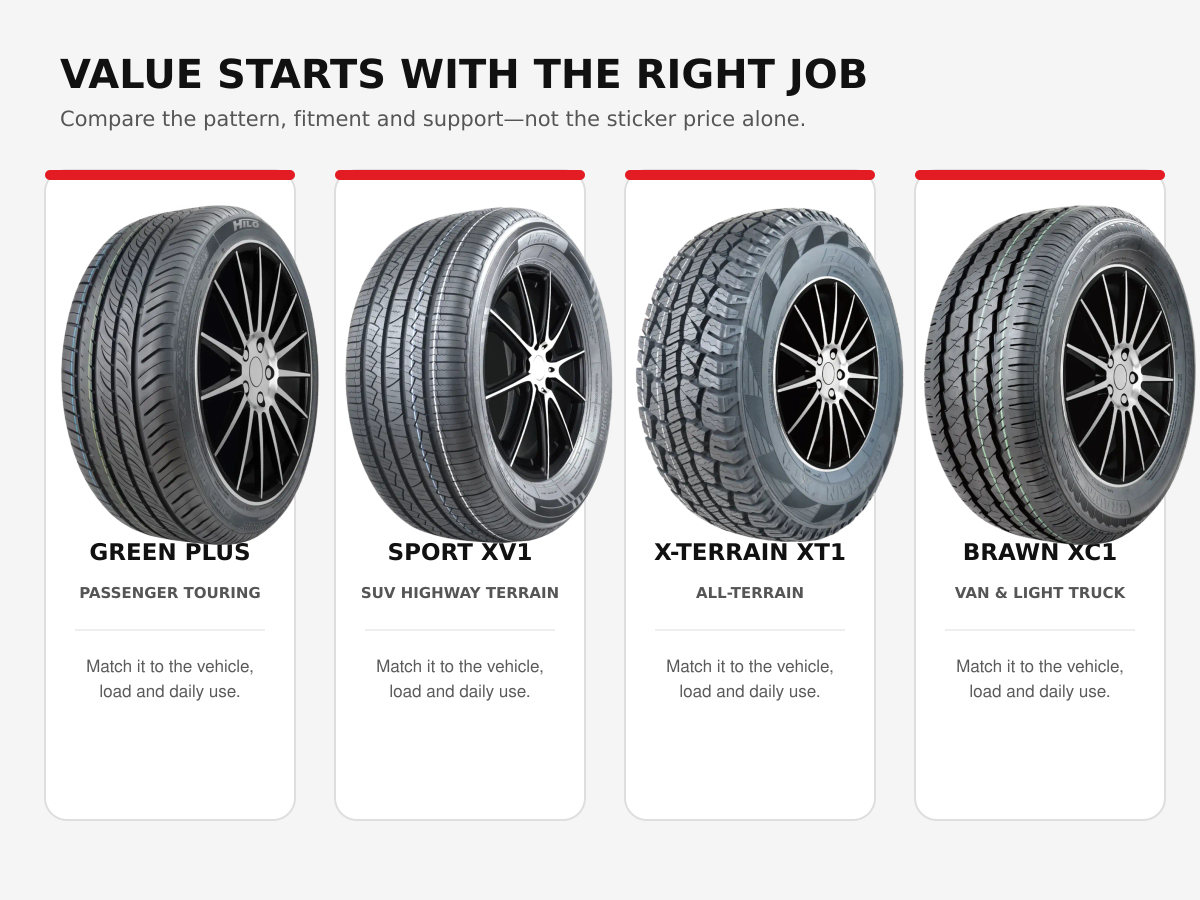
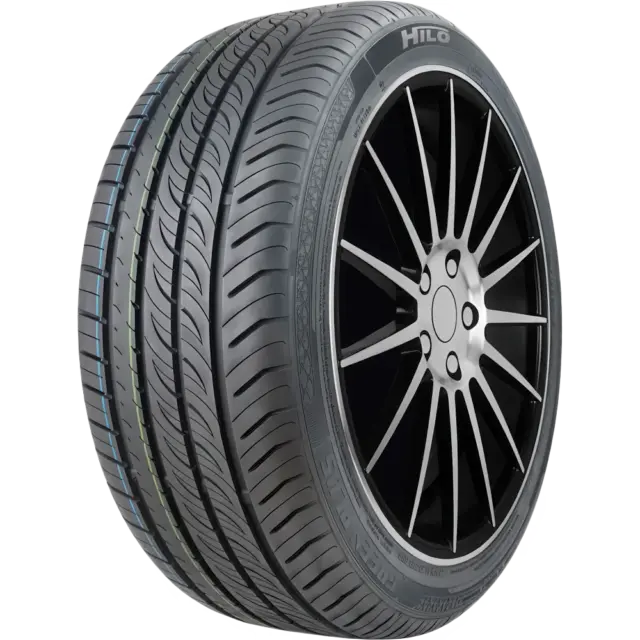
GREEN PLUS: broad passenger-car coverage
The official GREEN PLUS page lists 108 manufacturer-range sizes from 155/65R13 to 295/25ZR22. HILO describes a silica compound and five-variable pitch arrangement aimed at wet braking and cabin noise. It is a passenger and sport category option, not an off-road or commercial substitute.
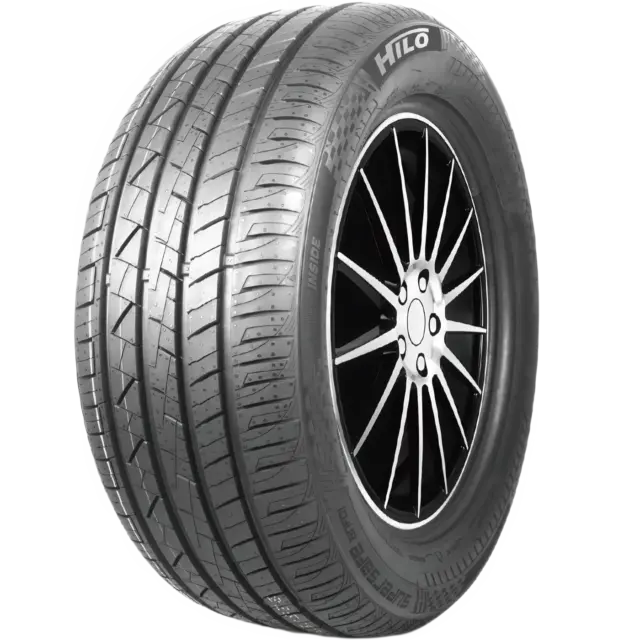
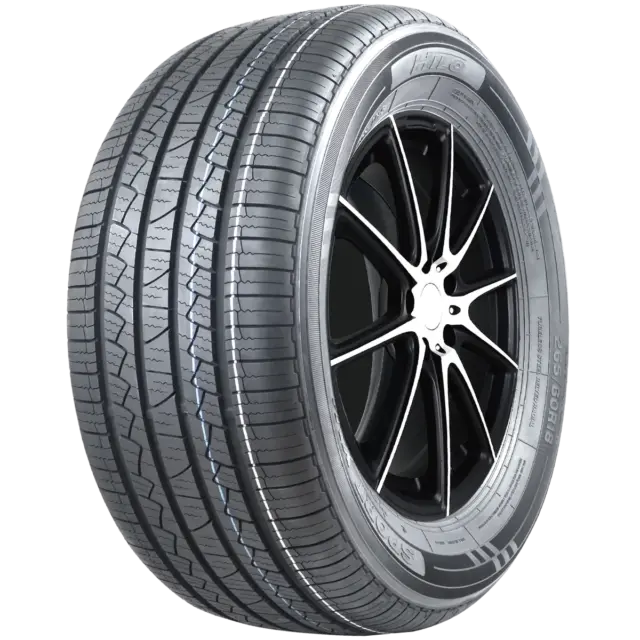
SPORT XV1: highway-terrain SUV coverage
The official SPORT XV1 page lists 95 manufacturer-range sizes from 205/75R15 to 295/40ZR22. HILO describes a carbon-polymer composite, optimised tread pitch, zigzag elements and four longitudinal grooves. It is classified as SUV H/T, making it relevant to SUVs that mainly use sealed roads.
X-TERRAIN XT1: sealed road and gravel use
The official X-TERRAIN XT1 page lists 24 manufacturer-range sizes from 15 to 20 inches, including passenger-metric and LT specifications with ply ratings up to 10PR. HILO describes an open-shoulder all-terrain design, convex sidewall construction and curved grooves intended for mixed surfaces such as mud and gravel.
BRAWN XC1: commercial van duty
The official BRAWN XC1 page lists 36 manufacturer-range sizes from 12 to 16 inches, with ply ratings up to 12PR. HILO describes four wide ribs, zigzag grooves and a polyester casing with steel belts for van and light-truck load duty.
SAFETY XF8: a specialist run-flat application
The official SAFETY XF8 page lists 21 run-flat sizes from 16 to 20 inches with ZRF/RF markings. HILO says fitting requires a vehicle with a tyre-pressure monitoring system. Transport Victoria also says run-flat tyres must be used with a functioning pressure-warning system and an appropriate run-flat rim design. This is a compatibility decision, not a generic upgrade for every car.
Not every manufacturer-listed size is necessarily held in local stock. Confirm the exact Australian availability before buying.
Where paying more can be better value
The cheapest compliant option may not be the best-value choice when:
- the vehicle regularly carries high loads or tows;
- wet-weather stopping and handling are a critical priority;
- the driver covers high annual kilometres and has reliable comparative wear data;
- the vehicle requires an original-equipment or specialist run-flat fitment;
- the car is high-performance or frequently driven in demanding conditions;
- replacement downtime has a high business cost; or
- independent testing shows a meaningful advantage in the exact sizes being compared.
In those situations, paying more for verified capability, refinement or support can reduce risk or total cost. Where possible, the evidence should relate to the exact model and size.
Where a lower-priced tyre can be good value
| Use case | Why a value-tier option may work | Main checks |
|---|---|---|
| Low- to moderate-kilometre urban car | Mainstream use does not necessarily require specialist capability | Placard match, wet-road priorities, fitted price and maintenance |
| Older family car kept in roadworthy condition | Correct new tyres can be more valuable than delaying replacement | Size/rating match, condition, stock and budget |
| SUV used mostly on sealed roads | An H/T pattern may cover the real job without paying for unused off-road capability | Load index, highway use, drainage, noise and current stock |
| Work van | A commercial tyre matched to load duty can be economical | C/LT specification, load, pressure, replacement support and downtime |
| Mixed-road 4×4 | A/T capability can be useful when gravel use is genuine | Construction, load, road/off-road balance, noise and rotation plan |
The five-minute value check
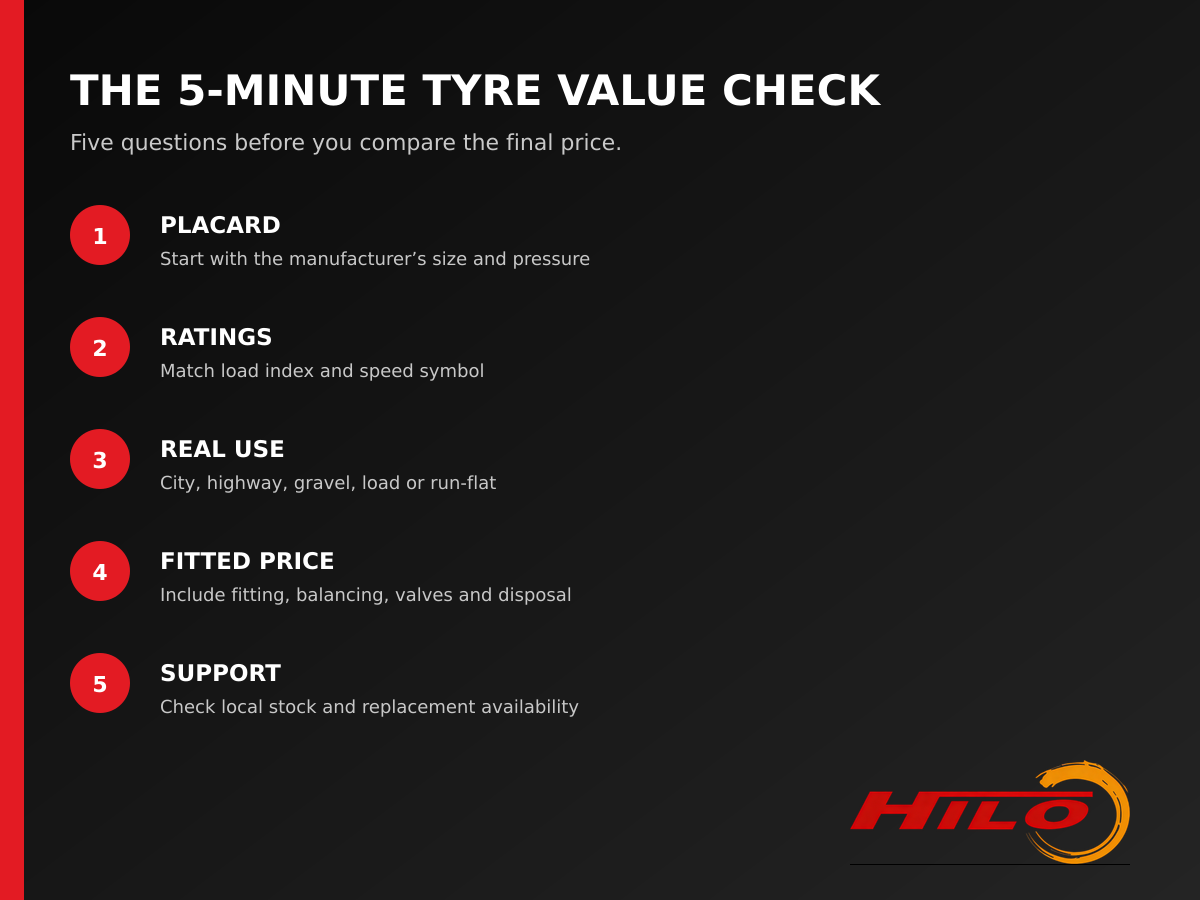
- Placard: What size and cold pressure does the vehicle manufacturer specify?
- Ratings: Does the exact tyre meet the required load index and speed symbol?
- Real use: Is the vehicle mainly driven on city roads, highways, gravel, worksites or in specialist run-flat duty?
- Fitted price: Does the quote include fitting, balancing, valves, disposal and any necessary alignment?
- Support: Is the exact size stocked in Australia, and can a single replacement be sourced later?
If any answer is unclear, pause the purchase and speak with a qualified tyre professional.
How to judge the value
Cheap tyres are worth considering when the lower price reflects efficient value rather than a shortcut around fitment, ratings or support. A sound buying decision starts with the vehicle placard, selects a model designed for the real job, compares the full fitted price and confirms replacement availability.
That is how the same brand can offer useful options for a passenger car, highway SUV, mixed-road 4×4, work van and run-flat vehicle without any one pattern being right for all five.
Frequently asked questions
Are cheap tyres safe in Australia?
Price alone cannot answer that question. The exact tyre must be approved for road use, correctly specified for the vehicle, suited to the conditions, professionally fitted and properly maintained. Compliance is the baseline; performance can still differ between products.
What should be included in a fitted tyre quote?
Ask whether the quote includes the tyre, fitting, balancing, valves or service kits, disposal fees and any alignment that is actually required. Run-flat and TPMS-related work may involve additional requirements.
Do cheap tyres wear out faster?
There is no honest brand-wide answer. Wear depends on the exact compound and construction, vehicle, load, pressure, alignment, rotation, roads and driving style. Use your own recorded kilometres or reliable comparative evidence for the exact product.
Are highway-terrain tyres suitable for an SUV?
They can suit an SUV used mainly on sealed roads when the exact size and ratings match the vehicle. Regular gravel or off-road use may justify an all-terrain or rugged-terrain pattern instead.
Can I fit run-flat tyres to any car?
Do not assume so. Run-flat fitment needs compatible vehicle systems and rims; the HILO SAFETY XF8 page specifically requires a vehicle with tyre-pressure monitoring. Confirm compatibility before fitting.
How can a business compare commercial tyre value?
Track the full fitted cost, kilometres actually achieved, downtime, damage history and replacement availability across comparable vehicles and routes. Recorded operating data is more useful than a generic mileage promise.
Related guides
- HILO Australian tyre range
- HILO R/T vs A/T Guide
- How to read the numbers on your tyre sidewall
- HILO tyres stocked in four Australian warehouses
- Find a HILO stockist
Sources
- Australian Government — Current Australian Design Rules
- RACV — How to buy the best tyres for your car
- NSW Government — Roadworthiness
- Transport Victoria — Tyre maintenance and repair
- HILO Tyres Australia — Full range
- Official HILO product pages linked in the model section above