An all-terrain (A/T) tyre is a 4×4 and SUV tyre built for vehicles that drive on both sealed roads and gravel, dirt or moderate off-road tracks. Its tread is more open than a highway-terrain (H/T) tyre and less aggressive than a rugged-terrain (R/T) or mud-terrain (M/T) tyre. For a tyre shop or workshop, picking an A/T tyre is not only about the tread. The same nominal size can come in passenger or light truck (LT) construction, with different load indices and speed symbols, and that decides whether it suits the vehicle.
This guide is for trade buyers. It shows where A/T sits among the 4×4 categories, compares common 4WD sizes across HILO’s off-road patterns, and lists what to check before you quote or order.
Where A/T sits among 4×4 tyre categories
4×4 tyres are usually grouped by how road-focused or off-road-focused the tread is. HILO’s catalogue has one or more patterns in each group. The speed symbol column below is taken from HILO’s published specification tables, and it shows one practical difference between the categories.
| Category | Typical use | HILO pattern | Speed symbols listed |
|---|---|---|---|
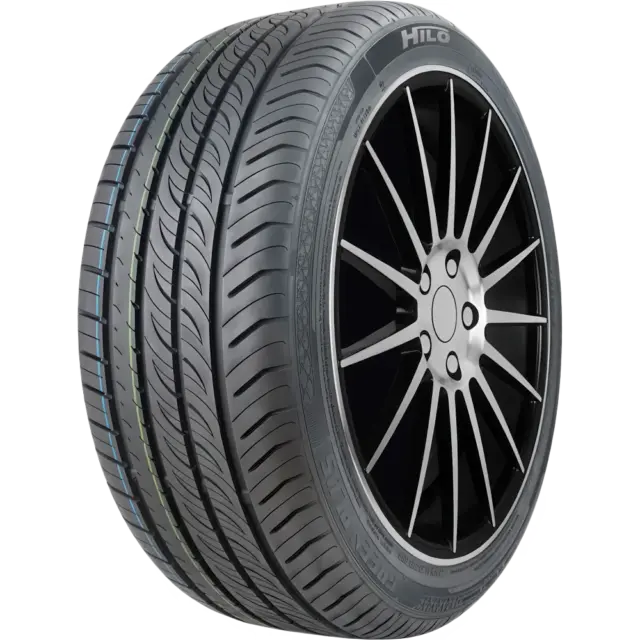
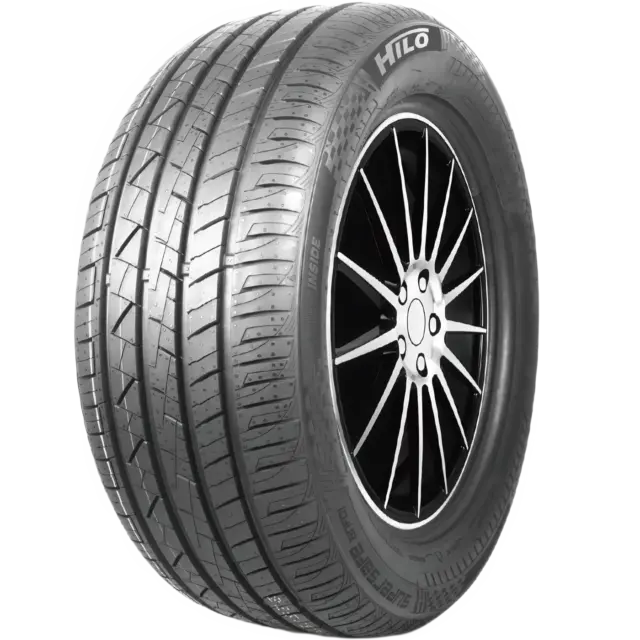
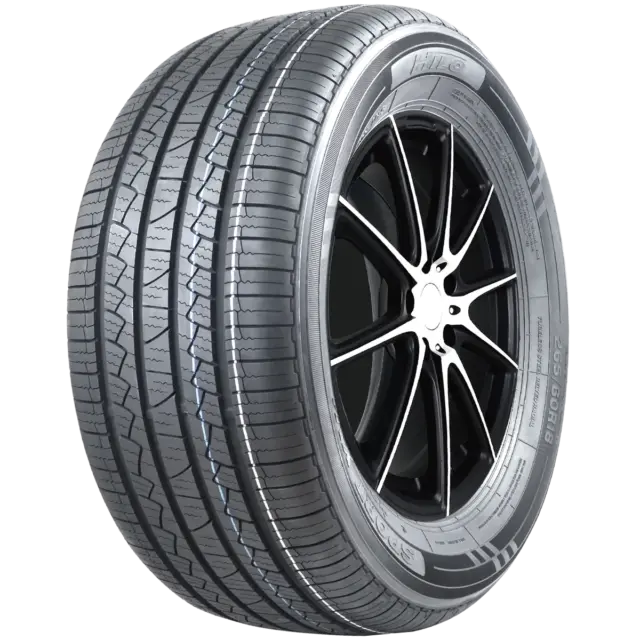
| Highway terrain (H/T) | Mostly sealed roads | SPORT XV1 | H, V, W and Y |
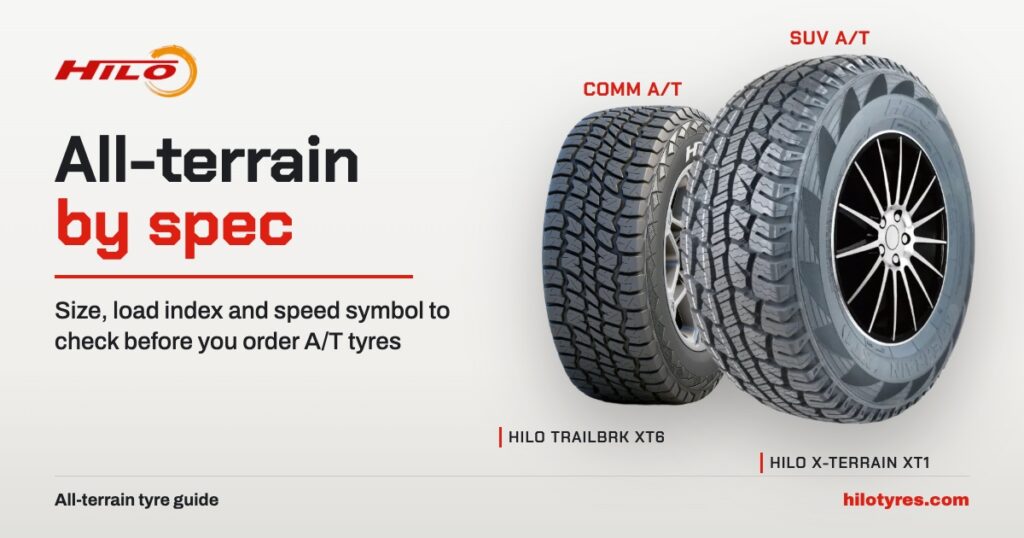
| All terrain (A/T) | Sealed roads plus gravel and moderate tracks | X-TERRAIN XT1 | T or S (passenger); R, S or Q (LT) |
| Commercial A/T | Utes and vans working off sealed roads | TRAILBRK XT6 | S on all 11 sizes |
| Rugged terrain (R/T) | Rocky tracks, ruts, more off-road time | WILDGRIP RT1 | Q on 23 of 24 sizes; S on one |
| Mud terrain (M/T) | Mud, deep ruts, difficult access tracks | X-TERRAIN MT1 | Q on all 15 sizes |
In the European Commission’s tyre-parameter guide, the speed symbols mean: Q 160 km/h, R 170 km/h, S 180 km/h, T 190 km/h, H 210 km/h. The more off-road-focused patterns in HILO’s range are listed with lower speed symbols. When a customer wants to step up from an H/T to a more aggressive tread, the replacement still has to meet the vehicle’s load and speed requirements, as covered further down.
For the differences between the off-road categories, see our guides to rugged-terrain vs all-terrain tyres, mud-terrain tyres and highway-terrain tyres.
Is an all-terrain tyre right for the vehicle?
Start with how the vehicle is actually used, not with the tread. Questions worth asking the customer or the fleet manager:
- Surface mix. Roughly how much of the driving is sealed road, and how much is gravel, dirt, sand or rock? A vehicle that rarely leaves the bitumen may be better served by an H/T tyre.
- Loads and towing. Does it carry a fit-out, a tray load or a caravan? Heavier work points towards LT construction or a higher load index.
- GVM upgrade. If the vehicle has had a GVM upgrade, check which tyre load rating the upgrade documentation specifies rather than relying on the original placard alone.
- Current tyres. What is the full size and service description on the vehicle now, and on the tyre placard?
- Wheels. What rim diameter and width are fitted? Each HILO entry lists a standard rim width.
- Size changes. Is the customer asking for a larger or wider tyre? That needs separate checks (see our guide to 33-inch and 35-inch tyres).
Same size, different specification: common 4WD sizes
A nominal size does not tell you the whole specification. HILO lists several popular 4WD sizes in more than one pattern, and often in more than one construction. The table shows how they compare.
| Size | X-TERRAIN XT1 (A/T) | WILDGRIP RT1 (R/T) | X-TERRAIN MT1 (M/T) | Other HILO entries |
|---|---|---|---|---|
| 265/65R17 | 112T | 116Q XL | – | XT6 LT265/65R17 120/117S 10PR; XV1 112H |
| 265/70R17 | 115T | 115Q | LT265/70R17 121/118Q 10PR | XV1 115H |
| 285/70R17 | LT285/70R17 121/118Q 10PR | LT285/70R17 126/123Q 10PR; 116/113Q 6PR | LT285/70R17 121/118Q 10PR | – |
| 265/75R16 | LT265/75R16 123/120R and 120/117R, both 10PR | – | LT265/75R16 123/120Q 10PR; 119/116Q 8PR | XV1 116H |
| 285/75R16 | LT285/75R16 121/118Q 10PR | LT285/75R16 126/123Q 10PR; 116/113Q 6PR | LT285/75R16 126/123Q 10PR; 116/113Q 6PR | – |
| 265/60R18 | 110T | 114Q XL | – | XV1 110H |
In 265/65R17, for example, the XT1 is a passenger tyre rated 112T, while the RT1 is 116Q XL and the XT6 is an LT tyre rated 120/117S. These are three different tyres for three different jobs, even though they share a size. Several sizes also have two versions within the same pattern, so the order must include the full service description and ply rating, not just the size. Our guide to reading tyre sidewall numbers explains each marking.
Passenger or LT all-terrain?
Of the 24 XT1 sizes HILO lists, 9 are passenger construction on 16- to 20-inch rims and 15 are LT on 15- to 17-inch rims. In HILO’s tables, the LT entries carry a ply rating, usually two load indices (single and dual fitment) and a higher maximum pressure than passenger entries of a similar size. For example, the XT1 265/70R17 115T lists 1,215 kg at 350 kPa, while the XT1 LT285/70R17 121/118Q 10PR lists 1,450 kg single at 550 kPa.
The choice depends on the vehicle’s placard, loads and work. Our LT all-terrain tyres explained guide covers the markings and when LT construction is worth discussing.
Check the replacement against the vehicle’s requirements
Transport for NSW’s guideline for alternative wheels and tyres (VSI 09) sets out the basic rules. The replacement tyre’s load rating must be at least the original. Its speed rating should be equal to or higher than the original tyres. The guideline allows a lower speed rating only on vehicles whose original tyres are rated above 180 km/h, and then not below the vehicle’s top speed, with a warning label recommended. Check the rules in your own state as well.
This is where the speed symbols in the first table matter. Moving a vehicle from an H-rated H/T tyre to a Q-rated R/T or M/T tyre needs this check before the order is placed. An A/T tyre rated T, S or R may give more room, depending on the vehicle.
For pressures, use the vehicle placard for the tyres the manufacturer specified. Queensland’s Department of Transport and Main Roads TyreSmart brochure notes that the maximum pressure on the sidewall is the pressure needed to carry the maximum load. It is not always the vehicle’s recommended pressure. See our guide to 4WD tyre pressures for road, sand and towing.
HILO all-terrain options
X-TERRAIN XT1 (SUV A/T)
HILO describes the X-TERRAIN XT1 as an all-terrain pattern for consideration when routes include sealed and unsealed roads. The current table lists 24 sizes from 15 to 20 inches: 15 LT entries rated 6PR, 8PR or 10PR, and 9 passenger entries, three of them XL. Most entries also list EU tyre-label grades (rolling resistance D, wet grip B or C, noise 71 or 72 dB). Use the grade listed for the exact entry you are comparing.
TRAILBRK XT6 (commercial A/T)
The TRAILBRK XT6 is described as an all-terrain pattern in light-truck construction for utes and vans that work off sealed roads but still need load rating. It lists 11 sizes from 16 to 20 inches with raised white lettering: 9 LT entries rated 6PR to 10PR and two 19-inch XL passenger entries, all with an S speed symbol.
If the route includes more rock or deep ruts, compare the WILDGRIP RT1 and X-TERRAIN MT1 as well, keeping in mind their Q speed symbols.
Is there a “best” all-terrain tyre?
Not one that suits every vehicle. Published tests and reviews compare particular sizes under particular conditions. The right A/T tyre for a customer is the one whose size, load index, speed symbol and construction meet the vehicle’s requirements, and whose tread suits the surfaces it actually drives on. HILO’s own product pages make the same point: the category and tread design alone do not establish a braking, wear or noise advantage over another model. For any performance claim, ask for evidence on the exact size.
What to send with an all-terrain tyre enquiry
- The full tyre description from the specification table: size, load index, speed symbol, and LT, XL or ply rating where listed.
- The vehicle and its placard tyre size and service description.
- How the vehicle is used: surface mix, loads, towing and fit-out.
- Wheel size and rim width.
- Quantity, delivery postcode and the date you need the tyres.
Send it through the HILO trade enquiry form. Availability, trade pricing and delivery are confirmed separately for the exact entry you request.
Frequently asked questions
What is the difference between A/T and H/T tyres?
H/T tyres are designed mainly for sealed roads. A/T tyres have a more open tread for gravel, dirt and moderate tracks while still being used on sealed roads. In HILO’s range, the SPORT XV1 (H/T) is listed with H, V, W and Y speed symbols. The X-TERRAIN XT1 (A/T) is listed with T or S on passenger sizes and R, S or Q on LT sizes.
Are all-terrain tyres the same as 4×4 tyres?
All-terrain is one type of 4×4 tyre. Others include highway-terrain, rugged-terrain and mud-terrain tyres. Which one suits a vehicle depends on how much of its driving is on sealed roads and how much off-road.
Can I fit all-terrain tyres to an SUV?
Often, if the size, load index and speed symbol meet the vehicle’s placard requirements. HILO lists the X-TERRAIN XT1 in passenger sizes such as 265/65R17 112T and 265/60R18 110T as well as LT sizes. Confirm the exact entry against the placard before ordering.
Do all-terrain tyres come in LT construction?
Yes. 15 of the 24 X-TERRAIN XT1 sizes and 9 of the 11 TRAILBRK XT6 sizes are LT entries with a ply rating. Passenger and LT versions of a similar size have different load and pressure figures, so quote the full description.